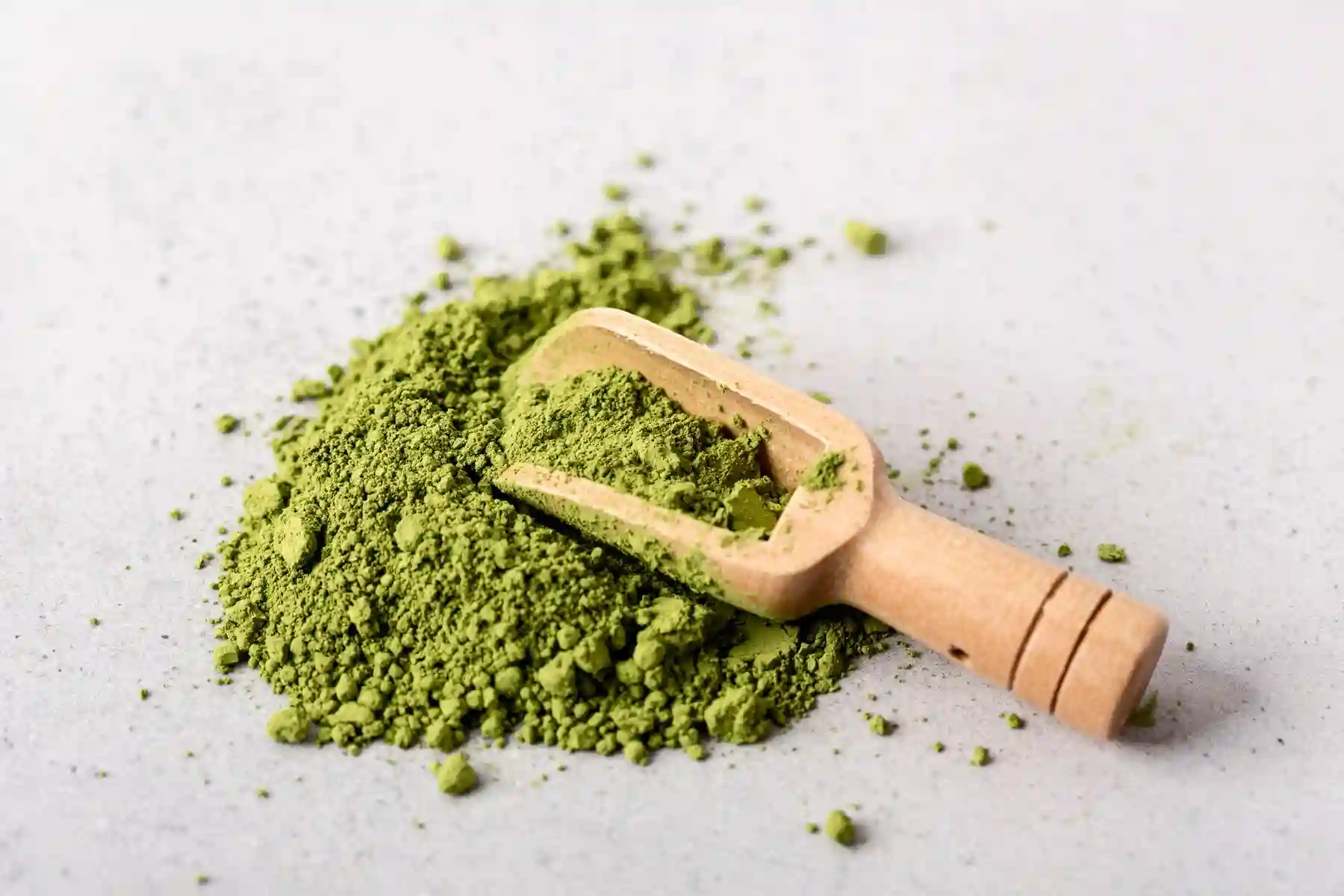


Kratom has been used for centuries across Southeast Asia. The leaves were chewed, brewed into tea, and consumed in its natural form – and for most of that history, the alkaloid profile stayed intact. What you got from the plant is what grew naturally.
That’s no longer a guarantee.
As kratom has become more mainstream in the West, a new category of products has emerged. Terms like “advanced kratom alkaloids”, “7-OH tablets”, and “Modus advanced alkaloids” are now marketed as the next evolution of kratom. These products are not the same type of kratom that people have used for millennia. They’re a different category entirely – one that raises important questions about safety, transparency, and what some vendors in the kratom industry have become.
In this article, we’ll cover everything you should know as a responsible consumer about 7-OH, what 7-hydroxymitragynine is, why some brands spike it, and why Mount Kratom doesn’t.
To understand 7-OH and spiked products, you first need to understand what causes the effects that people feel from taking kratom. Kratom (Mitragyna speciosa) is a tree with leaves that contain over 40 different types of alkaloids, such as mitragynine, 7-hydroxymitragynine, paynantheine, speciogynine, and speciociliatine.
The two most significant are mitragynine and 7-hydroxymitragynine (7-OH):
- Mitragynine is the primary active compound, which makes up ~60-70% of the total alkaloid content in natural kratom leaves and is the most reliable marker of potency.
- 7-hydroxymitragynine (7-OH) occurs naturally too, but only in trace amounts: typically less than 0.05% of the leaf, sometimes as low as 0.01%. It’s also produced in small quantities by the body when mitragynine is metabolized after consumption.
These alkaloids, and the effects they promote when consuming kratom, do not work in isolation. The full alkaloid profile – mitragynine, 7-hydroxymitragynine, speciociliatine, speciogynine, paynantheine, and dozens of others – produces effects based on how each alkaloid interacts with the others. This is what researchers often refer to as the entourage effect.
This balance is exactly what “advanced alkaloid” products ignore.
While 7-hydroxymitragynine (7-OH) is found in trace amounts in kratom leaves and by the body during metabolization, in both cases, the amounts are minimal. The problem is when 7-OH is spiked far beyond anything the plant naturally produces – at isolated doses, it’s 10-40x more potent than mitragynine.
Products in this space often contain 15-50mg of concentrated 7-OH per tablet – levels with no equivalent in traditional kratom use and no long-term safety data. Some lab analyses have found 7-OH concentrations up to 500% above natural levels – this is more indicative of adulteration, not typical extraction.
In fact, in 2025 the FDA recommended spiked 7-OH to be classified as a controlled substance due to addiction risk, dependency potential, and the absence of safety research on isolated or advanced alkaloid products.
Not all high-potency kratom products are created equal – this is an important distinction.
Legitimate kratom extracts and enhanced kratom products have existed for a long time and belong to a completely different category than isolated or spiked alkaloid products.
A legitimate kratom extract starts with whole-leaf and concentrates it. The complete alkaloid profile is preserved, just at higher levels. The balance of mitragynine, trace amounts of naturally occurring 7-OH, and the dozens of other compounds stays intact. You’re getting more of what the plant naturally contains – nothing added, isolated, or synthetic.
“Advanced alkaloid” products use misleading terms to make spiked products sound premium. Instead of concentrating the whole plant, they isolate and spike one specific alkaloid to levels that don’t exist in nature.
What these terms actually describe:
- One alkaloid (usually 7-OH) isolated and spiked far beyond levels that could ever exist naturally
- A modified alkaloid profile that no longer resembles whole-leaf kratom
- In some cases, lab-synthesized compounds rather than anything plant-derived
- Labels that omit actual alkaloid percentages – because transparency would hurt sales
- No third-party lab testing
The American Kratom Association – the industry’s most prominent advocacy organization – has issued warnings specifically about alkaloid tampering. This isn’t a fringe concern. It’s the industry itself drawing a line.
Full Spectrum Extract vs. 7-OH
| — | Full Spectrum Extract Mount Kratom extracts | 7-OH & Advanced kratom alkaloids |
|---|---|---|
| Source material |
Full Spectrum Extract
Whole kratom leaf |
7-OH
Isolated or lab-synthesized 7-hydroxymitragynine |
| Alkaloid Profile |
Full Spectrum Extract
Natural full-spectrum profile fully intact |
7-OH
Single alkaloid spiked far beyond natural levels |
| Effect |
Full Spectrum Extract
Balanced, consistent with whole-leaf kratom used for centuries |
7-OH
Unpredictable, unnaturally concentrated |
| Potency |
Full Spectrum Extract
Strong but controlled, mitragynine % listed |
7-OH
Extremely high, unstandardized |
| Safety data |
Full Spectrum Extract
Widely studied as part of broader kratom research |
7-OH
None – no clinical trials |
| Regulatory status |
Full Spectrum Extract
Legal, regulated under state kratom consumer protection acts |
7-OH
FDA recommended Schedule I classification (2025); DEA ruling pending |
Are advanced alkaloids and 7oh products safe?
There’s no clinical trial data on isolated advanced alkaloid products. The lack of research is especially concerning given how much more potent 7-OH is compared to mitragynine. Key safety concerns include:
Increased addiction risk: 7-OH binds to the same receptors in the brain that opioids target – as does mitragynine – but research suggests it does so up to 14x more than mitragynine and at roughly 40x the potency. At concentrated doses, the dependency profile is meaningfully different from whole-leaf kratom – more intense, faster to develop, harder to manage.
Potency is inconsistent & unpredictable: Without standardized quality assurance or lab testing, potency varies widely between batches and brands. A dose that felt manageable once may be overwhelming the next time.
The labels don’t tell you what you’re getting: Most products in this category don’t list alkaloid percentages, don’t provide Certificates of Analysis, and don’t screen for heavy metals, additives, or contaminants. When you’re shopping for kratom, you should know exactly what you’re getting (and what you’re not getting).
Why Mount Kratom doesn’t sell it
At Mount Kratom we only sell pure, unadulterated kratom. Kratom’s long-term accessibility depends on the industry maintaining a basic standard of transparency and safety. Any product that causes harm, generates a regulatory crisis, or puts consumers at risk has no place in what we do.
Every batch of kratom we sell is third-party tested at an ISO-accredited lab to provide customers full transparency and consistency in each batch. 7-OH spiking goes in the opposite direction – inflating potency by isolating one alkaloid, neglecting natural balance, and in some cases using synthetic additives – all without disclosing what’s actually in the product. In other words, it’s a different product with an unknown risk profile being sold under the kratom umbrella.
What should you look for on a kratom label?
Regardless of where you’re shopping for kratom, these are the standards to look out for on packaging:
- Mitragynine percentage: The primary alkaloid and the most reliable potency indicator. If a vendor can’t tell you this number, stop there.
- Third-party Certificate of Analysis: Ideally from an ISO-accredited lab that screens for contaminants and heavy metals.
- No synthetic additives, no isolated 7-OH spiking.
If a vendor can’t provide this information, the product likely isn’t worth purchasing.
Interested in more potency than plain leaf? There are still plenty of pure, unadulterated options that provide added strength with no spiking or synthetic isolation of alkaloids.
Enhanced Capsules
Our Enhanced Capsules combine plain leaf kratom with full-spectrum extract derived entirely from the whole leaf. No synthetically isolated alkaloids, no spiking – just concentrated extract for added potency with the complete alkaloid profile intact.
Gummies
Extract-based in a familiar and pre-measured format. No preparation required, discreet, easy to take on the go, and available in 15mg, 30mg, and 50mg mitragynine.
Shots
Concentrated liquid extract with 1-3 high-potency servings per bottle. Fast onset and travel-friendly – a good fit for experienced users who want strength in a convenient format.
Tinctures
The most concentrated liquid option – 15 servings per bottle where a few drops goes a long way. Best for users who want precise control over their dose at extract-level potency.
Try Rotating Strains
Seasoned kratom users often rotate or stack their strains to offset tolerance to the effects of one specific type of kratom that builds up with prolonged use. For example, if you commonly use a specific strain like Red Borneo, you could try switching to Red Maeng Da, or even mixing red and green vein strains in equal parts before increasing your dose.
Different types of kratom provide different types of effects – white vein is generally for energy and focus, red for relaxation and discomfort relief, and green for a well-rounded balance of both. Rotating helps keep your tolerance in check, often without needing a potency upgrade.
FAQ
7-OH (7-hydroxymitragynine) is a naturally occurring alkaloid present in trace amounts in kratom leaf. It’s also produced in small quantities by the body when mitragynine is metabolized. In its natural form it makes up only 0.01%-0.05% of the leaf – but some vendors isolate it far beyond natural levels, resulting in something that no longer resembles kratom.
In the trace amounts naturally found in kratom leaf, 7-OH has been part of traditional kratom use for millennia. Isolated alkaloid and 7-OH products are a totally different story – there’s no clinical trial data, potency is unstandardized, and the FDA recommended Schedule I classification in July 2025 (DEA ruling still pending).
A marketing term for products where one alkaloid (usually 7-OH) has been isolated and spiked to levels that don’t exist anywhere in nature. The term doesn’t appear in scientific literature and has no standardized definition. It’s designed to make adulterated products sound premium.
At the federal level 7-OH remains unscheduled as of June 2026, but 13 states have already banned it such as Alabama, Arkansas, California, Florida, Indiana, Kansas, Kentucky, Louisiana, Mississippi, Rhode Island, Tennessee, Vermont, and Wisconsin. More states are actively pursuing legislation.
Full-spectrum extract concentrates the complete alkaloid profile of whole-leaf kratom, meaning it’s the same kratom profile people have used for centuries but with more potency than plain leaf. Isolated 7-OH products spike one alkaloid beyond anything the plant naturally produces and discard the rest. In other words, concentration vs. isolation are not the same thing.
Conclusion
7-hydroxymitragynine is an alkaloid found in kratom and is a part of the full alkaloid profile – but only in trace amounts. The problem is when some vendors isolate it, concentrating it to levels with no precedent in traditional use, and selling it as a premium kratom product without lab testing or transparent labels.
Advanced kratom alkaloids trade the plant’s natural integrity for marketing-friendly potency numbers and skip the part where anyone verifies what’s actually in it.
Mount Kratom does not sell it. We believe that consumers should always know what is in the product they’re getting. Our products are full-spectrum, whole-leaf extracted, third-party tested, with mitragynine percentages listed on every package – all backed by our 30-day satisfaction guarantee.